Newborn Vision - 10 Alarming Symptoms
There are many different, sometimes conflicting opinions about newborns’ vision. In this article, I gather the most important information on what a child in the first month of life should see, or more precisely – how it should react, what it should look at, and what visual reflexes it should have.
Newborn vision is not like that of an adult. In fact, a newborn’s vision is the least developed sense. Their looking is very instinctive and reflexive since it is only after birth that true light reaches their eyes, and the child only then learns to receive information from the surrounding world. However, the development of newborn vision is very dynamic, and any abnormality can affect the child’s entire life.
How Does a Newborn See?
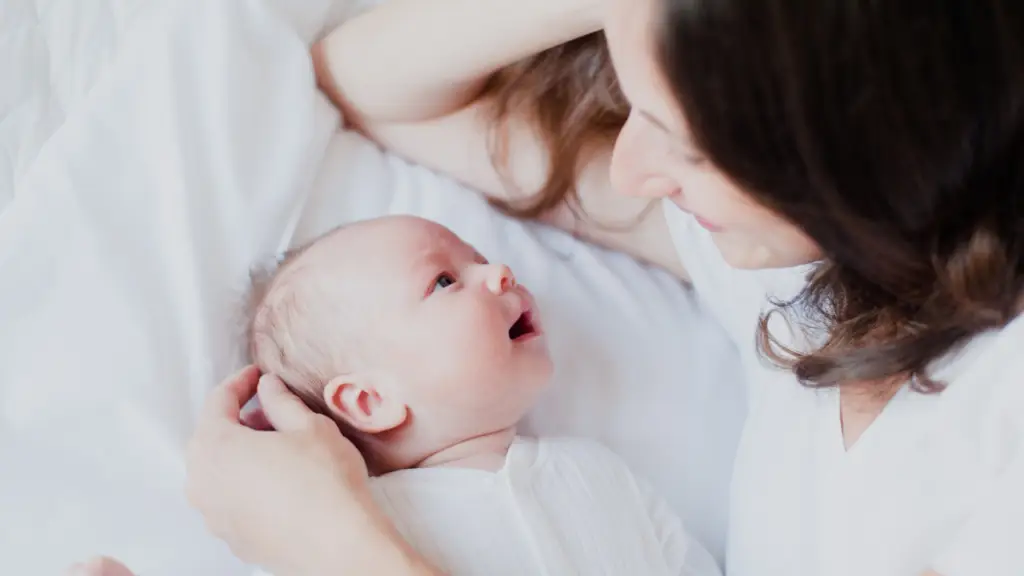
A newborn sees very poorly. At a distance of 20-30 centimeters from the face, it sees blurred outlines of the parents’ faces. It does not perceive colors, so it reacts to contrasting, standout images and toys. The child’s eyes follow a slowly moving object. When looking at the mother’s face, a newborn looks into her eyes because they are in constant motion. Children willingly stare at the light. Initially, newborns only see in two dimensions.
How Does Newborn Vision Develop?
- the corneal reflex appears (a protective eye reflex – the eyelids of the touched eye close),
- pupils react by narrowing to light,
- reflexive closing or pressing of the eyelids under the influence of strong light directed at the child’s face,
- the first saccadic eye movements appear (involuntary jerky movements, visible when observing the face or toy),
- the child chooses and prefers a human face,
- carefully stares at the faces of close people from a distance of 15-40 cm, likes changing facial expressions and tries to imitate them,
- uses one eye or the other alternately,
- likes contours, simple vertical and horizontal patterns, large sizes (preferably black and white).
Newborn Vision - 10 Alarming Symptoms
Certainly, it is worth knowing what should concern us in the development of a child’s vision so that in the event of noticing abnormalities, we can contact a specialist as soon as possible.
It is unnatural for newborns:
- when there is a visible difference in the size of the eyeballs, the appearance of eyes and eyelids e.g., cloudy cornea, white pupil, uneven pupils, uneven width of the palpebral fissure,
- when eyes are in involuntary movement, constantly “swimming” in different directions (this could be congenital nystagmus),
- when something other than tears appears, e.g., pus,
- when the child does not look at the faces of close people,
- often has closed eyes,
- eyelids droop while opening the eyes,
- eyeballs or one eye deviates from the proper position towards the nose, forehead, temple, all the time,
- nystagmus of only one eye occurs or has occurred,
- eyes are red, watery without “reason”,
- the child often presses the eyes with fists.